

OJK : KAMI ALL OUT JALANKAN REFORMASI PASAR MODAL
Indonesia's financial services regulator has strongly defended its reform efforts following a proposal by global index provider MSCI to downgrade the country's capital market status, with the agency's chair emphasizing the scope and seriousness of ongoing changes.
Friderica Widyasari Dewi, chair of the Financial Services Authority (OJK), told journalists in Jakarta on Tuesday that claims the regulator has been inactive are fundamentally incorrect.
If people say we're not doing anything, that's completely wrong. We've been all out with everything we've done.
The statement comes after MSCI announced on October 15 a consultation on reclassifying Indonesia from Emerging Market to Standalone Market status, a move triggered by concerns from market participants about persistent opacity in shareholding structures and suspected coordinated trading. MSCI will announce its final decision by the end of June 2027.
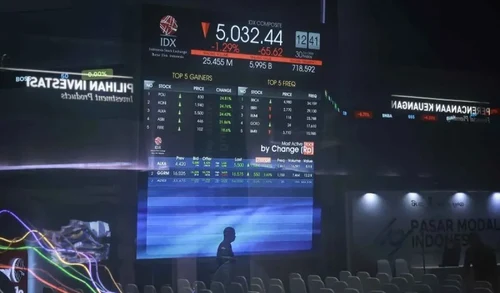
The announcement sent shockwaves through Indonesian markets, with the Jakarta Composite Index plunging 11.57 percent on October 16 to 5,185.11, marking the country's sharpest stock selloff since the Asian Financial Crisis in 1998. The index has since recovered, closing at 5,278.89 on Tuesday with a gain of 282.28 points or 5.65 percent.
Comprehensive Reform Package
Friderica detailed multiple reform initiatives implemented by OJK since early 2026, including enhanced disclosure requirements for shareholdings above 1 percent, implementation of High Shareholding Concentration policies, and a gradual increase in minimum free float requirements to 15 percent from the previous 7.5 percent threshold. The new free float standard took effect on March 31, 2026, with phased compliance deadlines extending to March 2029 for some companies.
The regulator has also expanded investor classification into 39 categories to improve granularity in domestic and foreign investor data. These measures form part of eight action plans launched on February 1, 2026, four of which were completed by April and submitted to MSCI.
Enforcement Actions and Ongoing Investigations
Beyond policy changes, OJK has taken concrete enforcement measures. The agency imposed a total of Rp2.1 trillion in fines on three companies—PT Dian Swastatika Sentosa (DSSA), PT Barito Renewables Energy (BREN), and PT Petrindo Jaya Kreasi (CUAN)—for violations of capital market regulations.
Friderica acknowledged that enforcement requires time for proper investigation and evidence gathering before sanctions can be imposed according to applicable regulations. In cases of suspected coordinated trading, the regulator must identify and prove the involvement of related parties.
OJK's investigations have uncovered significant violations across the market. Of 61 stocks examined on the High Shareholding Concentration list, 31 showed indications of potential criminal violations of capital market regulations.
Structural Market Changes
The Indonesia Stock Exchange announced on October 19 that it would exclude 80 stocks flagged for high shareholding concentration from the Jakarta Composite Index calculation. These stocks represent approximately 18 percent of the index's total weighting, marking a major structural adjustment to the benchmark.
The reforms come as MSCI has maintained a freeze on Indonesian securities in its indexes since January 2026, preventing increases to Foreign Inclusion Factors and blocking additions to the MSCI Indonesia Investable Market Index. The freeze remains in place until further notice.
MSCI had warned in June that if sufficient progress was not evident by the November 2026 Index Review, it would consider launching a consultation on reclassification, giving OJK several months' notice before the October announcement.
Market Confidence and Outlook
Regarding the stock market's recovery, Friderica characterized the positive movement as reflecting market participants' confidence in the domestic capital market. She noted that share buyback activities by companies have supported positive sentiment.
The OJK chair urged market participants to assess capital market developments rationally, considering both company fundamentals and the broader Indonesian economic situation rather than reacting solely to short-term volatility.